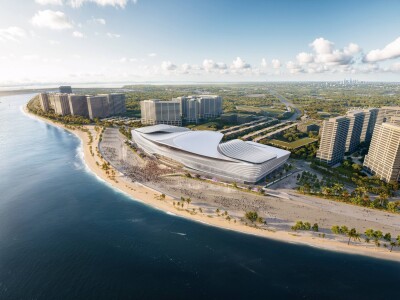

Vinhomes Green Paradise in Can Gio exemplifies this strategic shift. At its core, the project places the governance (G) factor at the center of the ESG++ model, aiming to build a city capable of regeneration and proactive long-term adaptation. The project is positioning itself not as a late entrant but as a re-architect of coastal urban logic.
When Governance Defines Quality of Life
For decades, Asian urban development prioritized growth speed and capital attraction. However, climate-related pressures, urban flooding, rising operational costs have exposed the limits of those indicators. International research, including "Happiness in urban environments," now links quality of life not only to amenities but also to safety and environmental resilience. Even technical standards such as ISO 37120 increasingly emphasize public service delivery and transparency over purely economic metrics.
This rebalancing is most visible in coastal cities, where high economic potential coexists with direct exposure to sea-level rise. Jakarta's subsidence crisis and the challenges faced by Bangkok and Manila illustrate the long-term costs of prioritizing speed over adaptive capacity. In this context, urban governance must extend beyond routine administration to function as an integrated system of risk management, forecasting, and proactive response.
Can Gio as a Strategic Test of Adaptive Capacity
As Ho Chi Minh City expands southward, Can Gio presents a concentrated version of the challenges facing Southeast Asian coastal urbanism. The peninsula contains a dual ecological structure: a large marine interface and a UNESCO-recognized mangrove biosphere reserve. This configuration imposes high sensitivity on any development decision. The economic use of marine resources must align with conservation requirements and regional ecological safety.
From an international perspective, Can Gio serves not only as a green buffer but also as a governance test case, where development can proceed without repeating the costly lessons observed elsewhere.
Vinhomes Green Paradise responds to this challenge by expanding the conventional ESG framework into an ESG++ model structured around two additional pillars: regeneration and resilience.
Marc Townsend, Senior Advisor at Arcadia Consulting Vietnam, observed that prioritizing environmental protection over short-term profit targets represents a strategic choice that positions the project as a distinctive model worthy of regional discussion. The defining feature is the placement of governance (G) as the central layer, enabling consistent execution of environmental (E) and social (S) objectives through international benchmarks such as BREEAM and ISO 37122.
Data Infrastructure and the Urban Operating System
At the core of the governance model is the ESG Hub, an AI-integrated platform designed for continuous monitoring of environmental indicators, energy consumption, and emissions. The system generates automatic alerts when risk thresholds are breached and transmits data directly to public display screens and residents' mobile devices.
In the long term, the ESG Hub also plays the role of a data platform for synthesizing ESG reports, managing emission reductions and tracking the carbon footprint throughout the super project's lifecycle, a key factor for sustainable commitments to be verified by actual operational data.
Alongside data-driven governance, the ESG++ urban area incorporates infrastructure solutions tailored to coastal conditions. These include sea reclamation techniques, active flood warning and drainage regulation systems, and materials resistant to saltwater corrosion. Such features reflect a risk-prevention approach embedded from the design stage.
This smart city model, with the application of IoT, artificial intelligence and big data application, is integrated into core operational layers such as security, traffic, fire prevention and energy management. The residential experience is supported by an automated ecosystem comprising self-driving vehicles, delivery robots, and service robots. Within individual apartments, a centralized smart management interface allows residents to control lighting, temperature, and security systems.
The operating model does not rely solely on technology. A professionally trained management team and 24/7 resident services form a "soft governance layer" that reinforces system stability and consistency.
Broader Implications
From an investment perspective, urban governance capacity is consistently linked to the ability to accumulate long-term asset value. Once infrastructure linkages between Can Gio, central Ho Chi Minh City, and the international seaport system are completed, the area will transform from an ecological space to a marine tourism and logistics hub.
Practice from cities developed according to ESG standards like Hammarby Sjöstad or Sentosa shows that real estate value is always more stable and durable against fluctuation cycles.
At a broader level, Vinhomes Green Paradise Can Gio illustrates a shift in Vietnam's approach to coastal urban development. The integration of governance with data systems and technology sends a signal to international observers: the future value of a city will be determined not by its physical mass but by its governance capacity and adaptive flexibility against market fluctuations.
Hashtag: #Vinhomes
The issuer is solely responsible for the content of this announcement.