
The region differs from its global peers in its response. CEOs in APAC expect more geopolitical disruption over the coming year than CEOs elsewhere, yet report their highest level of preparedness in the past three years, at a point when confidence in the rest of the world has begun to ease.
Key Findings for APAC:
- AI is the top critical challenge for chief executives worldwide:
- 94% in Asia-Pacific rate it critical or existentially critical, compared with 91% globally. Only 6% in the region consider it less critical, the lowest proportion recorded for any challenge. Geopolitical instability follows at 89% in both APAC and globally. Economic uncertainty is level with it globally at 89%, and slightly behind in the region at 85%.
- The share of APAC CEOs who say their organisations are prepared has risen two and a half times since 2024:
- 78% rate their organisation's readiness to adapt at 7 or above on a 10-point scale, where 10 is well prepared, up from 31% in 2024. Globally, the same measure fell this year, from 64% to 58%.
- The APAC region expects more turbulence, not less:
- 73% expect geopolitical disruption to increase over the next twelve months vs. 62% globally, and 85% rate economic uncertainty as critical or existentially critical.
- APAC CEOs frame AI within a broader innovation agenda:
- Asked what major changes they are implementing, APAC CEOs cite innovation most often, at 54% against 48% globally, and investing in AI at 43% against 50%. Globally, the order is reversed. Both rank at the top in each group and complement each other, as AI is also part of the innovation agenda.
- APAC leaders lean far more heavily on business relationships:
- Informal CEO networks are named among the most important alliances by 72% in the region, against 47% globally, about one and a half times the global rate. Public-private partnerships are also valued more highly at 41% against 32%, and 56% say business alliances have grown more important over the past year, against 45% globally.
- APAC leaders see inner leadership capabilities and outer skills and knowledge capabilities as inseparable for success:
- 96% in APAC say their success will depend on strengthening both their inner capabilities, such as self-awareness, resilience, curiosity, learning agility and emotional range, and their outer capabilities, such as business acumen, enterprise judgement and functional expertise. Globally, the figure is 85%. Within that, 62% in the region say the two must be fully integrated, against 47% globally, and only 3% point to outer capability alone, against 9% globally.
AI is now the challenge chief executives consider most critical to their organisations, worldwide and in Asia-Pacific alike, having edged ahead of geopolitical instability globally and economic uncertainty in the region. The consensus in the region is close to universal, with only 6% rating it less critical, the smallest proportion recorded for any challenge.
"CEOs can invest in AI much faster than they can change how an organization works," said Francesco Buquicchio, Global CEO of Egon Zehnder. "That gap matters. Leaders need to be clear about where the technology will make a difference, who has the skills to put it to use and what they must keep investing in for the long term."
"The organisations creating the Chief AI roles in Singapore are the data-driven ones, the companies already furthest along," said Ang Wan May, Singapore Managing Partner of Egon Zehnder. "Where boards once asked for a technology leader to deliver a platform, they now want someone who will lead the AI strategy and deployment across the business. We would expect these roles to evolve as AI becomes embedded, much as the digital transformation roles of a decade ago were eventually absorbed into the business."
Asia-Pacific preparedness is at a three-year high, against the global trend
The proportion of APAC chief executives rating their organisation's readiness to adapt at the speed required at 7 or above on a 10-point scale, where 10 is well prepared, has risen from 31% in 2024 to 62% in 2025 and 78% this year. Close to half, 47%, now rate themselves at 8 or above, compared with 26% globally. In contrast, the global measure eased from 64% in 2025 to 58% in 2026.
"Expecting more disruption and feeling ready for it are not contradictory here," said Ms Ang. "Leaders in this region have spent the past three years working through supply chain shocks, conflict and a shifting trade map, and have continued to grow through it. The mental preparedness for disruptions and increased responsiveness of leaders and organisations to it is what the data is likely to be picking up. Preparedness in APAC has risen in each of the last three years."
How APAC leaders are facing the turbulence
Asked what major changes they are making, APAC leaders cite innovation most often, with AI investment close behind, while globally AI investment comes first. They also rank new strategic alliances and partnerships third, at 37% against 30% globally. The ordering reflects emphasis rather than choice, suggesting a region that frames AI within a broader innovation agenda rather than as a separate programme to be funded on its own.
They also lean much more heavily on relationships. Informal CEO networks are named among the most important alliances by close to three in four leaders in the region, against fewer than half globally. Public-private partnerships are valued more highly here as well, at 41% vs. 32% globally, and more than half say business alliances have grown more important over the past year.
"The hard part isn't recognizing that the world is changing. It's making decisions when the trade-offs are real and the answers aren't obvious," said German Herrera, Chair of Egon Zehnder. "CEOs have to protect what matters today while preparing their organizations for what comes next, without pretending they can predict it. That takes judgment, curiosity and people around them who are willing to challenge their thinking."
About the study
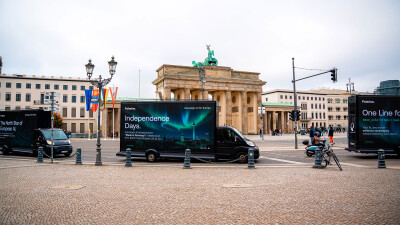
The CEO Response examines how chief executives are responding to an increasingly complex global environment and preparing themselves and their organisations for the future. The findings are being presented at the Berlin Global Dialogue, which brings together leaders from business, policy, and academia to address pressing global economic and geopolitical challenges.
The 2026 study surveyed 843 chief executives worldwide, of whom 70 are based in Asia-Pacific. Over half (57%) of the region's respondents are or have been a Group CEO. They lead organisations across financial services (23%), industry (21%), consumer (20%) and technology and communications (14%), among other sectors. Almost two-thirds (64%) head publicly listed companies, with reported revenues ranging from under US$1 billion to more than US$50 billion. Year-on-year comparisons for the region are directional, as sample sizes differ between editions.
For more information and to access the full report, please visit: https://www.egonzehnder.com/the-ceo-response
Hashtag: #EgonZehnder
The issuer is solely responsible for the content of this announcement.
About Egon Zehnder
Egon Zehnder is the world's premier leadership advisory firm, helping organizations solve their most complex leadership challenges through executive search, board advisory, CEO succession, leadership assessment, and leadership development. With more than 600 consultants across 71 offices and 37 countries, the firm advises CEOs, boards, and leadership teams around the world.
For more information, visit egonzehnder.com and follow us on LinkedIn.